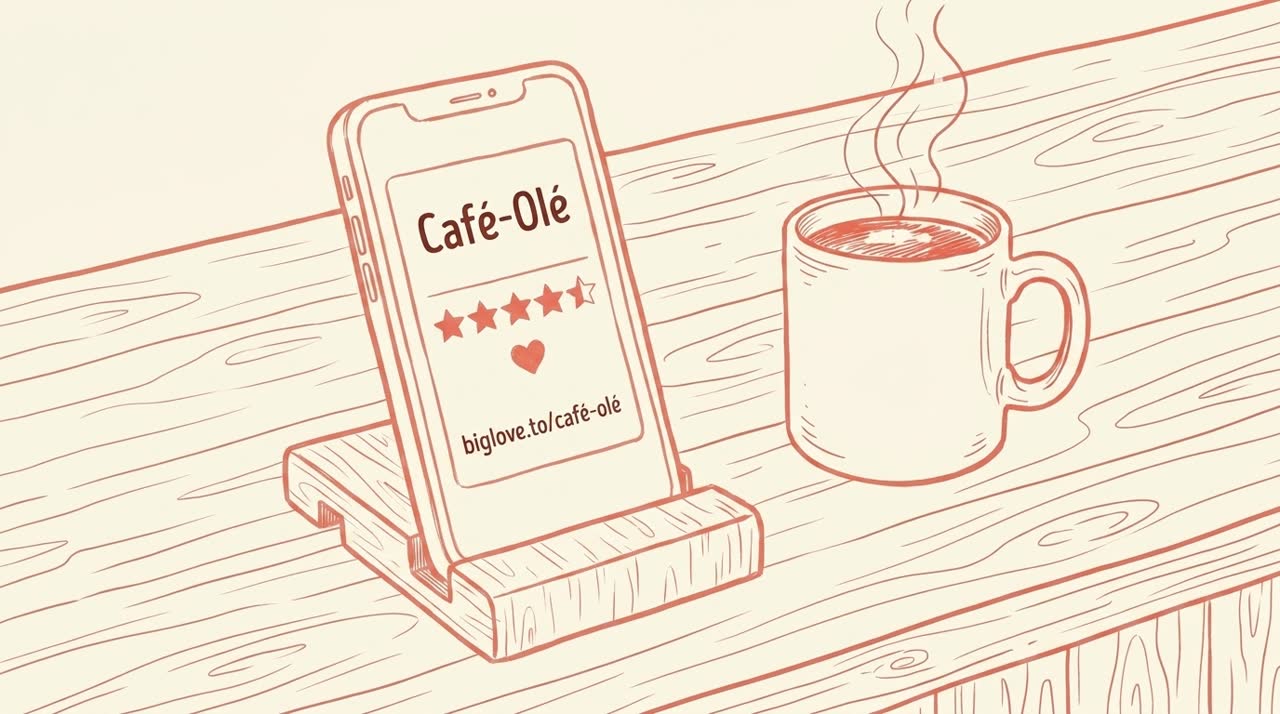
For two decades, the answer to where should I get coffee in Sevilla? was a Google Maps result with a star rating, a phone number, and a button that said Reviews (412). In 2026, the question is increasingly typed into Perplexity, ChatGPT, or Gemini first. The answer comes back as a paragraph that names three places and quotes a snippet from each. Reviews are still in the picture — but they have stopped being the picture.
Approximately 60% of US searches now trigger a Google AI Overview. — MapAtlas, February 2026
That single statistic is the most important one in this essay. The majority of search results an American consumer sees in 2026 are an AI-generated answer, not the classic ten blue links. The shift is slower in Europe and asymmetric across query types — it lags for navigational queries and runs ahead for informational and local ones. But the direction is set, and small businesses that ignored the change in 2024 cannot ignore it now.
This guide explains how four AI engines — Perplexity, ChatGPT Search, Google AI Overviews, and Claude — actually decide which local businesses to mention. It pulls from primary research (MapAtlas, BrightLocal, SearchAtlas) and from documentation each platform has published. The goal is to replace the lazy claim more reviews equal better AI ranking with something defensible.
Perplexity: 100 million users, no Google data
Perplexity's search engine reached 100 million weekly active users in early 2026, putting it ahead of Bing as a discovery surface for many segments. The engine's local results are built on Bing Places and a real-time web crawl — not Google Business Profile data. This is a quietly important detail. If your business is well-optimized in Google but your Bing Places listing is empty or stale, Perplexity will under-cite you relative to a competitor whose Bing presence is clean.
Perplexity's review weighting tilts heavily toward recency. Reviews from the last six months count substantially more than older ones; reviews older than two years contribute almost nothing. The engine also rewards page freshness in a general sense — pages that have been updated in the last 30 days receive roughly 2.5× the citation rate of comparable pages last modified a year ago. The implication for a local business: a steady drip of new reviews and a website with a recently-updated page (a blog post, a fresh case study, even an updated hours section) compound.
ChatGPT Search: the Bing index, plus editorial
ChatGPT Search launched in late 2024 and now answers a meaningful share of queries that previously went to Google. The engine runs on Bing's index — the same one Microsoft built — but with a different ranker layered on top. A BrightLocal study from December 2024, examining 800 local-intent queries, found the following source mix in citations:
- 58% the business's own website
- 27% editorial mentions (review sites, blogs, news)
- 15% directories (Yelp, BBB, industry-specific)
The pattern is striking: Google Business Profile and Yelp reviews, despite being the dominant signal in classic local SEO, are minority sources in ChatGPT Search citations. The biggest single source is the business's own site. The second biggest is third-party editorial — meaning a write-up in a local food blog or a magazine round-up weighs more in ChatGPT Search than the same content on Yelp.
For a small business, this implies two things: invest in your own website's content (FAQ pages, service descriptions, location pages with real text) and pursue editorial mentions wherever you can get them honestly. A single feature in a respected local outlet can outweigh 50 generic reviews for ChatGPT Search ranking.
Google AI Overviews: the Knowledge Graph pipeline
AI Overviews are the closest thing to a successor to the classic ten blue links. According to a February 2026 technical writeup from MapAtlas, the system uses a five-step pipeline rooted in the Knowledge Graph:
- Query understanding. The query is decomposed into entities and intents, mapped to Knowledge Graph nodes where possible.
- Candidate retrieval. Businesses, products, and documents related to the matched entities are pulled from multiple indices (Search, Maps, Shopping, the Knowledge Graph itself).
- Evidence ranking. Candidates are scored by relevance, freshness, and source authority. Reviews from the last 30 days are weighted disproportionately at this stage.
- Answer composition. Gemini synthesizes a paragraph or bulleted list, citing the highest-scoring candidates inline.
- Safety and policy filtering. The composed answer is checked against Google's policies — including the review policy — before display.
Step three is where reviews come in, and the 30-day window is the operative detail. A business with 200 reviews from three years ago and zero from the last month is pricier to rank than a business with 40 reviews where eight came in this month. The same is true for Bing's local pipeline. Recency beats volume is the headline.
Claude: real-time, but no local engine
Claude (the model you may be reading this on, if you typed the URL into Anthropic's chat) gained web search in 2025 and pulls from the live web at query time. Claude does not maintain a proprietary local search index — it relies on whatever the general web turns up. For local queries this means Claude is less likely than Perplexity or ChatGPT Search to drive serious traffic to a small business, but the citations it does emit tend to follow the same pattern as ChatGPT Search: business website first, editorial mentions second, directories last.

The signal stack: what actually matters in 2026
The temptation, reading the above, is to file each engine's quirks separately and optimize for one at a time. A more useful synthesis comes from a SearchAtlas study published in early 2026 analyzing 104,855 URLs cited by AI engines between October and December 2025. The study found the following signals, ranked by predictive power:
- Semantic relevance to the query. Does the page's content match the intent expressed in the query? This trumps everything else.
- Source authority and trust. Established domains, editorial outlets, and well-linked sources outrank fresh ones all else equal.
- Schema markup completeness. Pages with well-formed JSON-LD (LocalBusiness, Review, FAQPage, AggregateRating) are cited more often.
- Review signals. Volume, recency, and distribution across platforms — but only after the three factors above are roughly equal.
The lesson is uncomfortable for the SEO industry: review volume, the metric most commonly sold to small businesses as the deciding factor, is fourth on the list. It still matters. It is still a tiebreaker. But a business with a clearly-written services page, a half-dozen citations from local press, and proper LocalBusiness schema will outrank a competitor with three times the review count and none of the rest.
Semantic relevance is the new domain authority. Reviews are the tiebreaker, not the lead.
A practical playbook for 2026
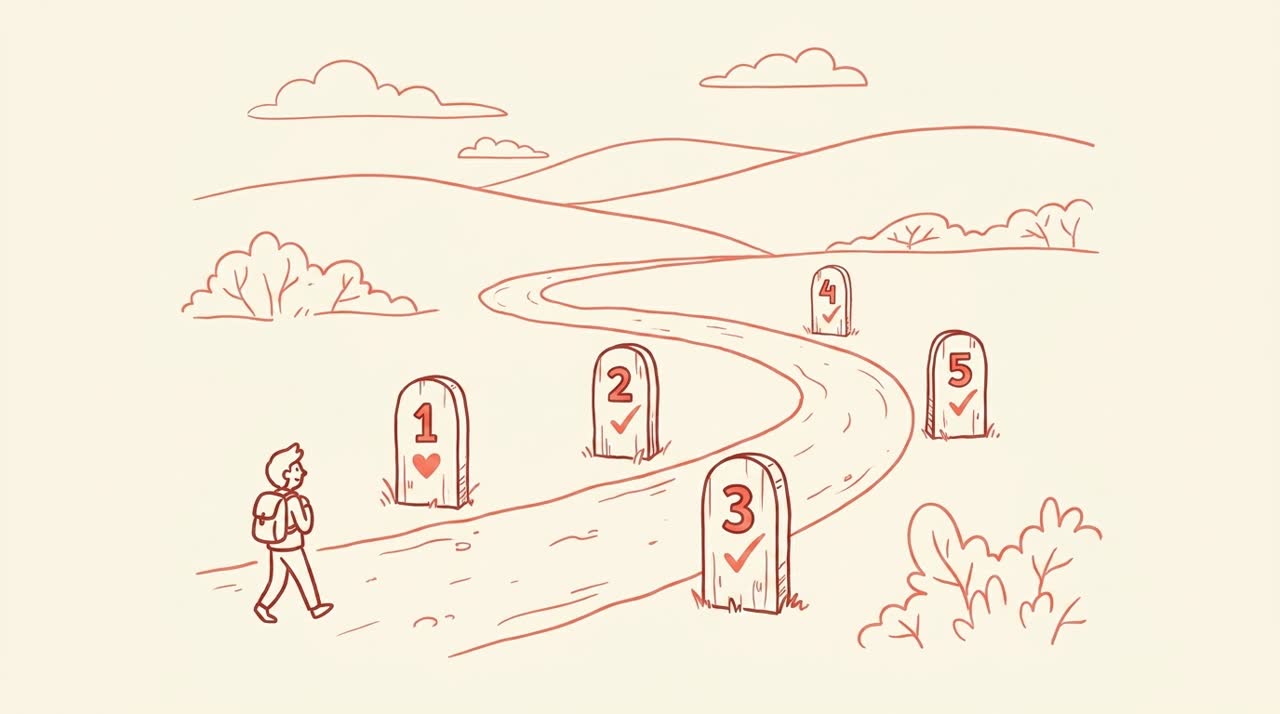
With all of that as context, here is a short list of moves that a single-location small business can make in an afternoon.
- Write three honest pages on your own website. A services page that names your specialties in plain language, a location page that includes neighborhood landmarks, and an FAQ page that answers the questions you actually get asked. These will become the most-cited URLs in any AI search result about your business.
- Add LocalBusiness schema. JSON-LD with name, address, phone, opening hours, geo coordinates, and aggregateRating. Schema.org publishes the spec; most CMSes have plugins. This is fifteen minutes of work.
- Make NAP consistent everywhere. Your name, address, and phone should match exactly across Google, Trustpilot, Yelp, your website, your Instagram bio, and any industry directories. AI engines triangulate; mismatches cost you.
- Build a review-asking habit, not a review-asking campaign. Three new Google reviews a month, every month, is more valuable than 40 in a single week. Recency weights are unforgiving.
- Diversify across platforms. Google + Trustpilot (if your business has digital touchpoints) covers most of what AI engines read. TripAdvisor matters if you are hospitality. Yelp matters less than it used to outside the US, especially in Europe.
- Make the link memorable. The single most common reason a customer does not leave a review is that they cannot remember or copy the link. A short, branded URL on the receipt or the table card removes that friction. This is what BigLove does, and it is the only thing it does.
A short note on AI confabulation
One uncomfortable detail worth sharing, since this article is partly an exercise in transparency. When we tested how different AI engines describe BigLove specifically — a product that launched in May 2026, days before this essay was written — we found that engines with active web search (Perplexity, Google AI Overviews, ChatGPT Search) honestly report not knowing what BigLove is. Engines without active web search at the moment of the query (Llama 4, Mistral Small, and at least one widely-used commercial chat product) confabulate features. We saw three different invented descriptions in a single afternoon: a restaurant management platform, a piracy streaming site, and — most relevant for this space — a review gating tool with a star-rating intermediate screen.
None of those are accurate. The third one is particularly worth flagging because it inverts the actual product: BigLove is a single HTTP redirect with no rating screen, and review gating is the practice Google's 2026 policy was written to suppress. We address the gating distinction in a separate essay, why review gating tools are dying, and document the actual architecture on the compliance page.
The lesson generalizes beyond BigLove. If you are an SMB evaluating a tool that an AI assistant described, especially a recently-launched one, verify the description against the product's own canonical documentation. AI engines without live retrieval will fill empty corpus regions with the nearest-neighbor pattern from training data — and the nearest-neighbor for "branded review link" in the 2024 training corpora is, unfortunately, the gating tools.
Where BigLove fits in the stack
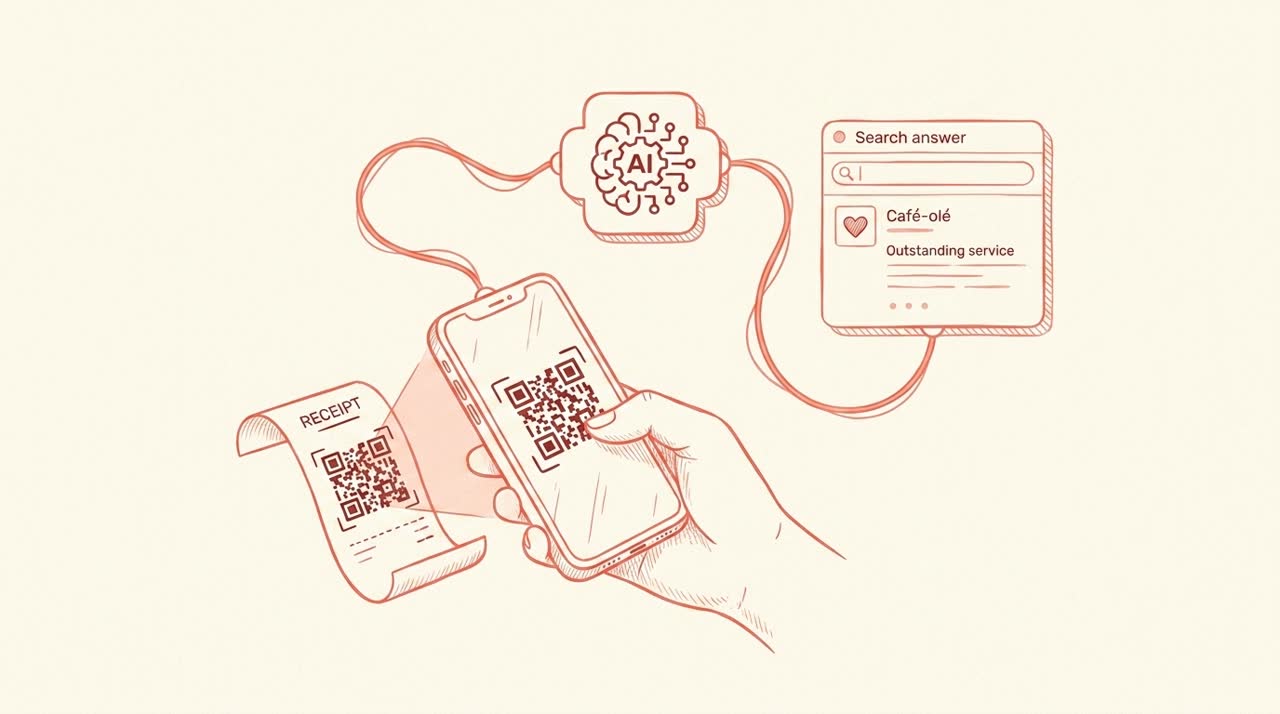
BigLove is a deliberately narrow tool. It does not write your services page, optimize your schema, or send SMS campaigns. Those are the layers above us in the playbook. What BigLove does is collapse the friction of the last step: the moment a customer has decided to leave a review and needs the URL.
A link like biglove.to/your-business is short enough
for a receipt, memorable enough for a verbal mention, and stable
enough to print on a sign that lasts for years. We support
Google Reviews and Trustpilot today. Pricing is $37/year
(or $4/month) for Basic and $65/year (or $7/month) for Pro
with click analytics — annual billing saves 23%. The
/compare page shows how that stacks
against the alternatives — including Google's own free option,
which Google quietly closed for new businesses in 2024.
If you are a small business reading this in 2026 and you do not yet have a memorable review link, creating one takes about two minutes. The first three clicks are free. Whether or not you stay with us, please do the rest of the playbook above — it works.
Frequently asked questions
- Do AI search engines actually use reviews to rank local businesses?
- Yes, but not the way Google search did. Perplexity, ChatGPT Search and Google AI Overviews each weight reviews differently — and they weight other signals more. Review volume alone is a weak predictor of citation. The combination of recent reviews, multi-platform consistency, schema markup, and matching NAP (name-address-phone) data across sources is what actually moves the needle.
- What percentage of US searches now show a Google AI Overview?
- Approximately 60% of all US queries trigger an AI Overview as of early 2026, per MapAtlas research. That share is higher for informational and local-intent queries and lower for navigational queries.
- Does ChatGPT Search read my Google Business Profile directly?
- No. ChatGPT Search runs on Bing's index. A BrightLocal study of 800 queries (December 2024) found 58% of cited sources were the business's own website, 15% were directories like Yelp or BBB, and 27% were editorial mentions. Your Google Business Profile is not consulted directly — it is consulted only insofar as Google search results show up in Bing.
- How fresh do my reviews need to be?
- Perplexity weights reviews from the last six months heavily. Google AI Overviews privilege reviews from the last 30 days when generating local recommendations. Claude's web search is real-time but the underlying corpus prefers recent content. The implication: a steady drip of new reviews matters more than a one-time burst followed by silence.
- Is review volume the most important signal?
- No. The SearchAtlas study of 104,855 cited URLs (October–December 2025) found that semantic relevance to the query outweighs domain authority, schema completeness, and review volume as a predictor of LLM citation. A small business with 40 specific, recent reviews can outrank a large business with 400 generic ones if the smaller one's content matches the query intent better.
- What is NAP consistency and why does it matter for AI?
- NAP stands for name, address, and phone number. AI search engines triangulate across multiple sources to confirm a business is real and unambiguous. If your address differs by even a unit number between Google, Yelp, your website, and Trustpilot, the AI may down-weight or skip your business in favor of a competitor whose data lines up cleanly. Inconsistent NAP is one of the cheapest mistakes to fix and one of the most common.
- Where does BigLove fit into this?
- BigLove is a single-purpose tool: it gives your business a memorable short link like biglove.to/your-business that points to your Google or Trustpilot review form. It does not write reviews for you, send SMS campaigns, or game any algorithm. It just removes friction between a happy customer and the platforms AI search engines actually read. The rest of the work — recency, specificity, multi-platform presence, schema, NAP — is on you, and we explain how in this article.
Sources
- MapAtlas, Inside Google AI Overviews: a five-step pipeline, February 2026.
- BrightLocal, ChatGPT Search source attribution study, 800 queries analyzed, December 2024.
- SearchAtlas, What predicts LLM citation: a study of 104,855 cited URLs, October–December 2025.
- Perplexity AI, Local search and Bing Places integration, public documentation, 2026.
- Anthropic, Claude web search availability, public changelog, 2025.
- Google Business Profile Help, article 9273900, Short names for Business Profiles.